designboom Announces MIT MAD’s Cohort of “Future World-Changing Designers.”

May 18, 2023
The ten Design Fellows are MIT graduate students advancing interdisciplinary design spanning AI and musical performance, urban planning and climate resilience, adaptive and resource-efficient construction, robotics and accessibility, climate-responsive architecture, scalable metamaterials, and AI-mediated civic accountability.
By Katherine Higgins
Apr 27, 2026
Each year, the MIT Morningside Academy for Design (MAD) supports MIT graduate students with a fellowship allowing them to pursue design research and projects while creating community. Pulling from different corners of design, they explore solutions in fields such as sustainability, health, mobility, urban planning, social justice, or education. The 2026 cohort of Design Fellows was first announced at the MIT Welcome Center, on the occasion of the MAD in Dialogue event.


Stephen Brade is an EECS PhD student at MIT. He uses live musical performance as a venue for research inquiry and creation, designing AI systems that take the stage alongside professional musicians. His work sits at the intersection of deep learning, human-computer interaction, and music technology, and is informed by his own practice as an Emerson-Harris Instrumental Jazz Scholar.
Brade's ongoing research centers on building agentic AI systems that can meaningfully participate in live improvisation — responding to, challenging, and complementing human performers in real time. Working with practicing jazz musicians, Brade develops new approaches to personalization, musical control, and the physical embodiment of AI within shared performance spaces.
Brade's research has been featured in public concerts at MIT, including "Agents in Concert," a performance showcasing three AI systems co-improvising with jazz musicians for a live audience.


Temuulen Enkhbat is an urban practitioner and civic designer from Mongolia, pursuing Master in City Planning (MCP) program at MIT. Her work focuses on finding innovative solutions to urban planning and climate resilience challenges in informal settlements through community co-design, youth engagement, and policy advocacy.
In 2023, Enkhbat co-founded the Ulaanbaatar Oasis, a project transforming underserved urban spaces into green parks in ger districts, a peri-urban settlement of Ulaanbaatar. She was selected as one of the 50 participants from the Global Shapers Community to amplify youth voices at the World Economic Forum Annual Meeting 2024.
Enkhbat is deeply committed to using design as a tool to include historically marginalized communities in the process of urban planning and policymaking processes. Her work seeks to advance systemic change while preserving the historical and cultural identities of place.


Yuki Gray is an artist and designer working across craft and architecture. Trained in furniture design at RISD and currently pursuing a Master of Architecture at MIT, his practice draws on traditional construction and the invention of everyday materials. Having grown up in Thailand, Japan, and the United States, Yuki brings a wide-ranging perspective to his work.
Before joining MIT he worked in construction in Japan on traditional shops and houses, and was a furniture and art fabricator in New York. Drawing on histories of making and design, Yuki explores the manipulation of material and form with inspiration from his surroundings.


Thomas Hyo-min King's current work is interested in the role of architecture within our transitioning energy regime; specifically, understanding the political ecology of building technologies and praxes, and how they reinforce or undermine meaningful climate action.
Thomas received his Bachelor of Science in Architecture at McGill University, where he worked as a research lead at Reconstruct to formulate governance strategies for scaling up deep energy retrofits across Quebec. More recently, Thomas has collaborated with the Office of Urban Resilience to improve water security in Mexico City’s peripheral settlements, and with the Northwest Bronx Community and Clergy Coalition (Our Bronx) to support the borough’s first Comprehensive Economic Development Strategy.


Anita Lin is an interdisciplinary designer specializing in bespoke assemblies and kit-of-parts systems. Her work focuses on prototyping complex material and mechanical systems through accessible and efficient fabrication methods. She has a particular interest in soft robotics and pneumatic systems across various mediums, integrating performance with a distinct aesthetic sensibility.
Anita is currently pursuing a Master of Science in Architectural Studies (SMArchS) in Computation at MIT. Originally from New York, she holds a Bachelor of Science in Architecture from SUNY Buffalo and a Master of Science in Matter Design Computation (now Design Tech) from Cornell University.
In addition to her design research, she is a co-lead of SoftMetrics, a venture supported by MITdesignX, developing a desktop device for textile measurement that enables accessible and reliable material data.


Daniel Massimino is a mechanical engineering PhD candidate in the Fabrication-Integrated Design Lab (FIDL). His current research focuses on the development of glass 3D printing to produce construction materials on the Moon using indigenous lunar regolith and on Earth using recycled post-consumer glass.
Massimino's background and interests in the built environment, manufacturing, and aerospace engineering converge in his work developing processes to build a lunar base while transferring that technology to address the growing volume of terrestrial glass waste. At MIT, he is also a mentor in MakerWorkshop, a student-run makerspace, and a glassblowing instructor in the MIT Glass Lab.


Maggie Nelson is a materials scientist, engineer, and PhD student in the Department of Materials Science and Engineering at MIT. Her work explores how materials can shape and mediate human experience, advancing a vision of affective engineering in which technical performance and human experience are inseparable design criteria.
She focuses on material systems that enable dynamic interaction between humans and technology. Drawing on feminist aesthetics, she examines how power and bias become embedded in material and technological systems, and how these systems can be redesigned to support autonomy and dignity.
During her undergraduate degree at Auburn University, her research in polymer recycling and photocatalytic materials led to a peer-reviewed publication and many national recognitions. As a Churchill Scholar at the University of Cambridge, she developed slot-die coating methods for waveguide-encoded lattices for indoor photovoltaics.
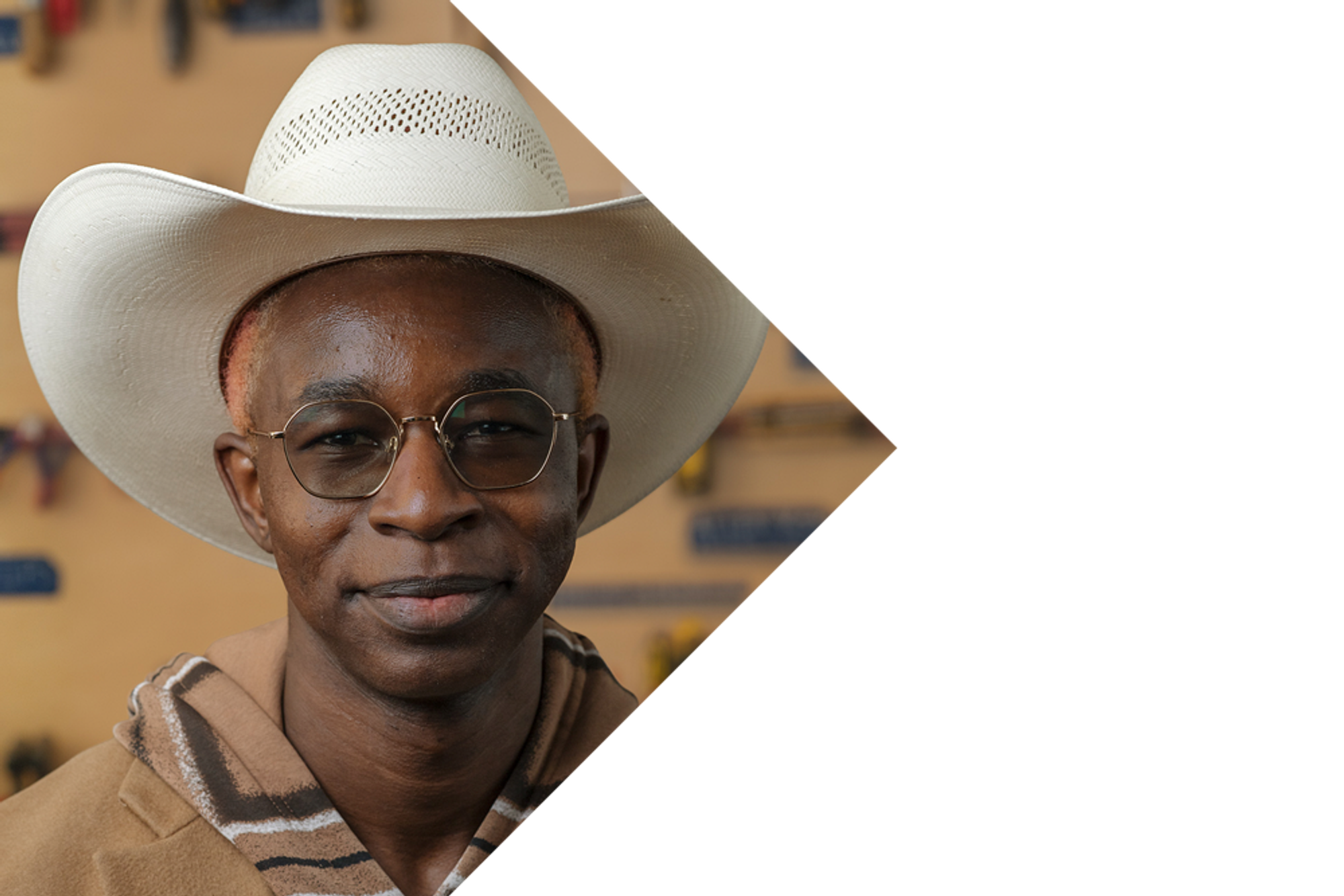

Joseph Mulenga Ntaimo is a graduate student in the Precision Motion Control Lab in the Mechanical Engineering (MechE) department. Originally from College Station TX, he came to MIT for his bachelor’s degree in mechanical engineering with a focus in musical robotics, and immediately continued into the MechE graduate program.
During his time at MIT, Joseph has designed engaging hands-on hardware and curriculum in various controls and robotics classes in MechE, and wants to inspire students to design and make. He is an avid machine designer, PCB designer, controls and mechatronics engineer, professional DJ, and musician with the broad goal of improving how people connect with each other.


Cassandra Overney is a PhD candidate, researcher, and designer at the MIT Media Lab's Center for Constructive Communication, where she builds AI-powered systems that strengthen the feedback loops between civic institutions and the communities they serve.
Through a multi-year co-design partnership with the NYC Department of City Planning and school districts in North Carolina, Overney develops platforms that create mutual accountability. Beyond the lab, Voice to Vision visualized how 3,000+ community inputs informed a neighborhood plan in Jamaica, Queens, and a companion platform for Winston-Salem/Forsyth County Schools synthesized 13,000+ comments into 124 human-reviewed narratives during a redistricting process.
As a member of the 2026 MITdesignX cohort and MIT Sandbox, she is exploring how to translate this research into a sustainable civic tech venture.


Ling Xu is a graduate student in Mechanical Engineering at MIT studying the mechanics of woven and compliant architected metamaterials in the Portela Research Group. Inspired by entangled matter such as polymer networks, biological systems, and textiles, her research investigates how complex mechanical behavior can be translated into design principles for metamaterials across scales.
Combining computational design, nonlinear mechanics, microscale fabrication, and in situ mechanical characterization, Ling studies how architecture can reconcile mechanical tradeoffs often considered incompatible. She is interested in how the mechanics of entanglements can inform the design of material systems that not only demonstrate unprecedented structural performance, but are also tunable, functional, and intelligent.
Prior to MIT, Ling received her BSE in Mechanical Engineering and Mathematics from the University of Pennsylvania, where she conducted research in the Sung Robotics Lab.
May 18, 2023

Oct 17, 2022